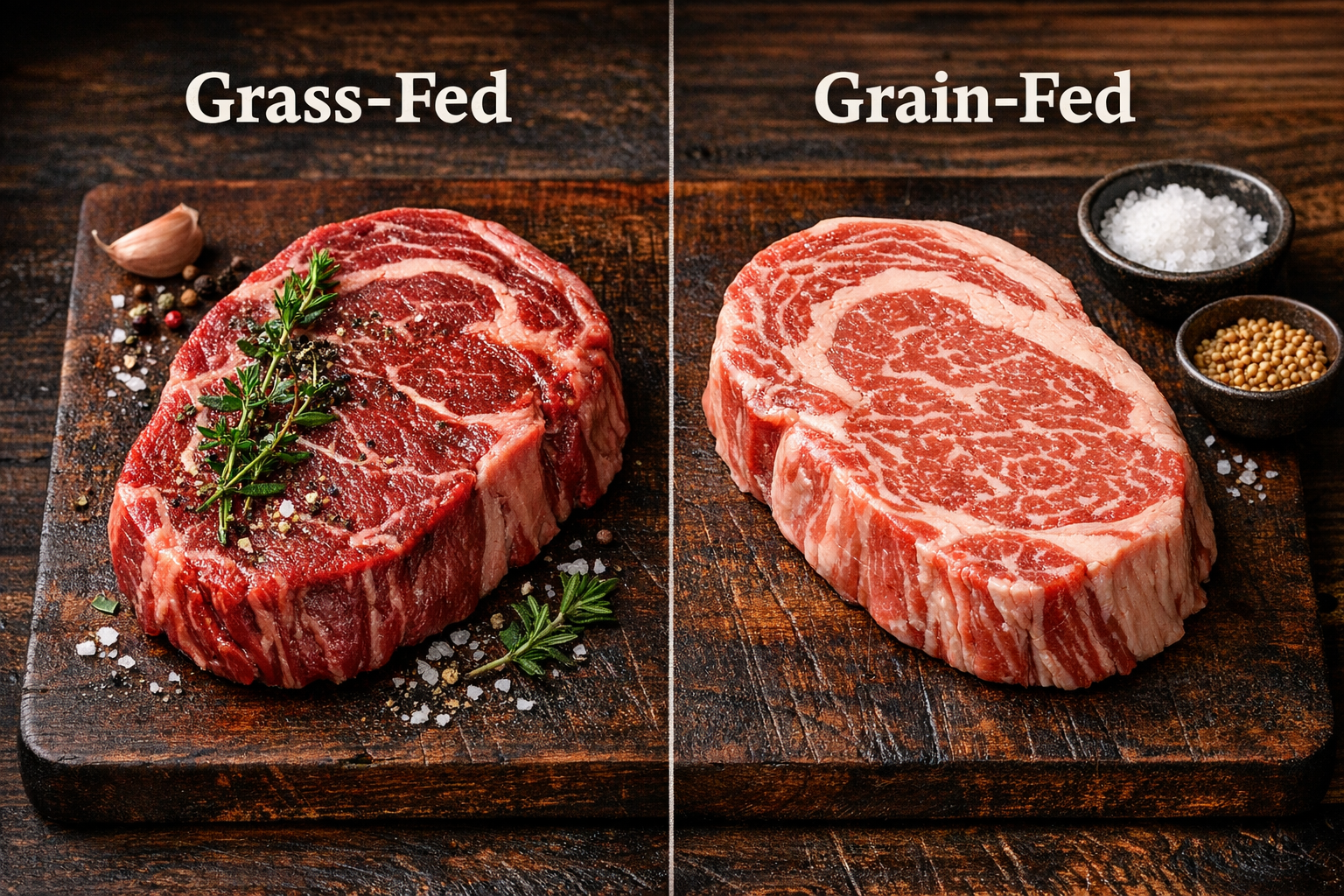
Walk into any grocery store and you'll see labels touting "grass-fed" beef at premium prices. But what's the real difference between grass-fed and conventional grain-fed beef? Is it just marketing hype, or is there genuine nutritional and ethical value behind the higher price tag?
The Nutritional Science
The differences begin at the molecular level. Grass-fed beef contains significantly higher levels of omega-3 fatty acids — the same heart-healthy fats found in fish. While grain-fed beef has an omega-6 to omega-3 ratio of about 20:1, grass-fed beef clocks in at a healthier 3:1 ratio. This matters because Western diets are already heavily skewed toward omega-6s, contributing to inflammation and chronic disease.
Grass-fed beef is also richer in conjugated linoleic acid (CLA), a fatty acid linked to reduced cancer risk and improved body composition. Studies show grass-fed beef contains 2-3 times more CLA than grain-fed. You'll also find higher levels of vitamins A and E, both powerful antioxidants that support immune function and skin health.
Flavor and Texture
Let's address the elephant in the room: grass-fed beef tastes different. It's leaner, which means less marbling and a more pronounced "beefy" flavor. Some describe it as earthier or more mineral-rich. The texture is firmer and benefits from lower cooking temperatures and shorter cooking times. If you're used to heavily marbled grain-fed steaks, grass-fed will require an adjustment — but many people come to prefer its cleaner, more complex flavor profile.
Environmental and Ethical Considerations
Cattle are ruminants — their digestive systems evolved to process grass, not grain. Feeding them corn and soy creates health problems that require antibiotics and creates environmental issues from concentrated feedlot operations. Grass-fed cattle, by contrast, live as nature intended: roaming pastures, converting grass humans can't eat into nutrient-dense protein, and building soil health through rotational grazing.
Our Highlands never see a feedlot. They spend their entire lives on pasture, grazing the same way their ancestors did in the Scottish Highlands for centuries. This isn't just better for the environment and the animals — it produces fundamentally different meat.
Why Highland Cattle Excel at Grass-Fed
Not all cattle thrive on grass alone. Many modern breeds have been selected for rapid weight gain on grain diets and struggle to finish properly on pasture. Highland cattle, however, are what's called "easy keepers" — they were bred in one of the harshest climates on earth to survive on rough forage. Their double coat, efficient metabolism, and natural marbling ability mean they produce well-finished, flavorful beef on nothing but grass, hay, and time.
Experience the Difference
Taste what grass-fed Highland beef should be: nutrient-dense, flavorful, and raised with integrity.
Shop Beef Learn More About Our Process