Highland Cattle Breed Standards
What makes a quality Highland
What makes a quality Highland
One of the oldest registered cattle breeds in the world
Scottish Highland cattle originated in the rugged Highlands and Western Isles of Scotland, where harsh climates and sparse forage shaped one of the hardiest breeds on earth. First recorded in the Highland Cattle Herd Book of Scotland in 1884, they represent centuries of natural selection for survival, adaptability, and productivity in extreme conditions.
Today, Highland cattle are prized worldwide not just for their iconic appearance, but for their exceptional docility, superior mothering instincts, longevity, and the quality of their grass-fed beef. They thrive where other breeds struggle, requiring minimal inputs and converting diverse forage into nutrient-dense meat with remarkable efficiency.
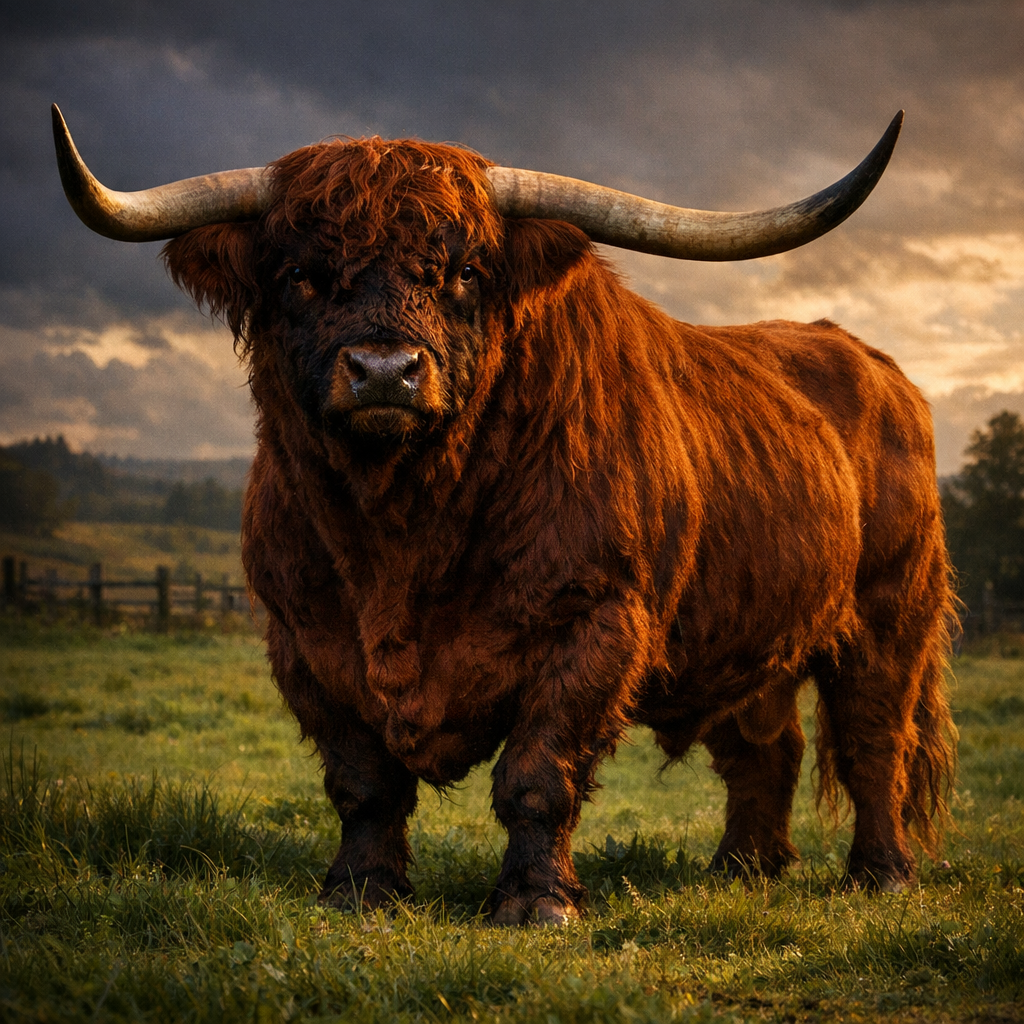
The breed's distinctive features—sweeping horns, double coat, and compact frame—aren't just aesthetic. Each characteristic serves a functional purpose that makes Highlands uniquely suited to sustainable, regenerative agriculture.
Understanding breed standards helps identify quality breeding stock and appreciate the genetic heritage that makes Highland cattle so valuable to small farms and homesteads.
Defining features of the Highland breed
Bulls: Long, sweeping horns that curve forward, wide-set and impressive in appearance.
Cows: Longer, more refined horns with upward sweep, often more dramatic than bulls.
Horns are a defining breed trait, though polled (naturally hornless) Highlands exist and are registrable.
Double-layered: Soft, downy undercoat for insulation plus long, coarse outer guard hair that sheds rain and snow.
Dossan: Distinctive long hair covering the eyes and face, protecting from insects and harsh weather.
The coat thickens dramatically in winter and sheds in warmer months, allowing adaptation to diverse climates.
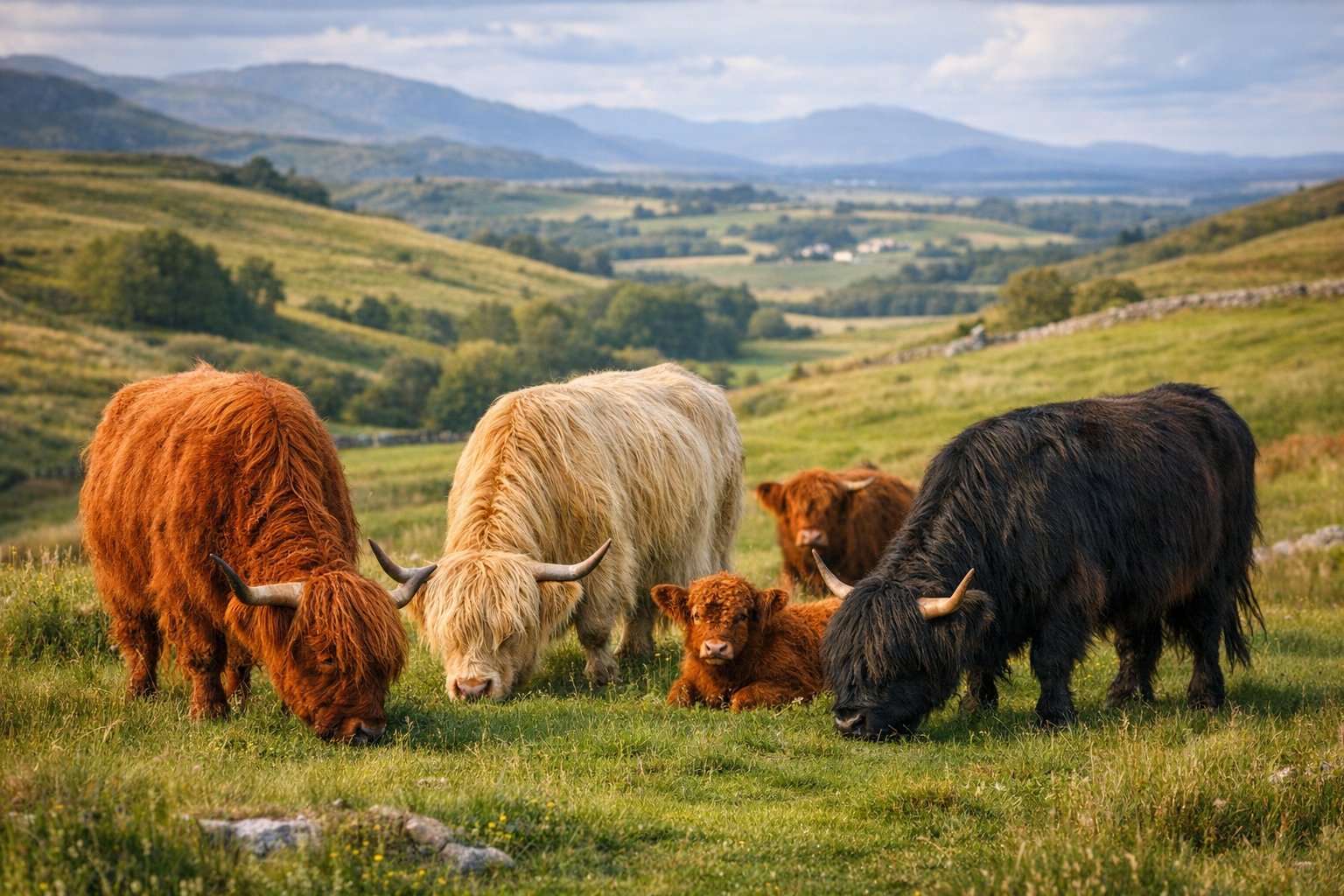
Highland cattle display remarkable color diversity, all considered equally desirable:
Red: Most common, ranges from light ginger to deep mahogany.
Black: Solid black to dark brown, often with lighter underbelly.
Dun: Silver-grey to mouse-colored, with black points.
Yellow: Cream to golden blonde. Brindle: Red or dun with black striping. White: Rare, cream to pure white.
Compact & Deep: Short, well-set legs supporting a deep, wide body with excellent rib spring.
Well-Muscled: Heavy hindquarters, thick through the heart girth, strong topline.
Hardy Frame: Dense bone structure, sure-footed on varied terrain, exceptional hoof quality.
Broad forehead: Wide between the eyes, showing intelligence and breed character.
Short face: Compact muzzle, wide nostrils, strong jaw.
Alert expression: Bright eyes (often obscured by dossan), responsive ears, calm demeanor.
Bulls: 1,500-1,800 lbs at maturity, standing 50-54" at the shoulder.
Cows: 900-1,200 lbs at maturity, standing 46-50" at the shoulder.
Moderate size allows efficient feed conversion while maintaining easy handling and lower pasture impact.
Functional advantages of the breed
Highland cattle thrive in climates that challenge other breeds. Their double coat eliminates the need for expensive barns or shelters—a simple windbreak suffices. They handle extreme cold, heat, humidity, and altitude with minimal stress, making them ideal for diverse regions and regenerative grazing systems.
Highlands require significantly less intervention than conventional cattle. No need for grain supplementation, minimal shelter requirements, natural resistance to many common cattle diseases, and exceptional foraging ability that allows them to thrive on marginal pastures other breeds would reject.
Highland cows are renowned for maternal instincts and calving ease. They typically calve unassisted, produce ample milk, and fiercely protect their young. Calves are vigorous at birth and grow quickly on mother's milk alone. This results in high calf survival rates and reduced labor for farmers.
Highland beef is naturally marbled and lean, with a higher ratio of Omega-3 fatty acids compared to grain-fed cattle. The meat is tender, flavorful, and nutrient-dense without excessive fat. Slow growth on pasture creates well-developed muscle structure and exceptional eating quality that commands premium prices.
Highland cows routinely breed and produce healthy calves well into their teens—far longer than commercial breeds. Bulls remain fertile and active for 12-15 years. This extended productive lifespan means lower replacement costs and the ability to build genetics over generations.
Despite their imposing appearance, Highlands are remarkably docile and easy to handle. They're calm around people, including children, and respond well to low-stress handling. This makes them ideal for small farms, homesteads, and operations prioritizing animal welfare.
The American Highland Cattle Association (AHCA) maintains the official registry for Highland cattle in the United States. Registration ensures genetic purity, traceable lineage, and adherence to breed standards.
Why Registration Matters:
At Primal Farms, all our breeding stock is registered with the AHCA. We provide full registration papers with every cattle sale, along with detailed pedigree information and health records.
Whether you're starting a herd, upgrading genetics, or adding a foundation female, registration protects your investment and ensures you're getting authentic Highland cattle with verified heritage.
View Available Cattle