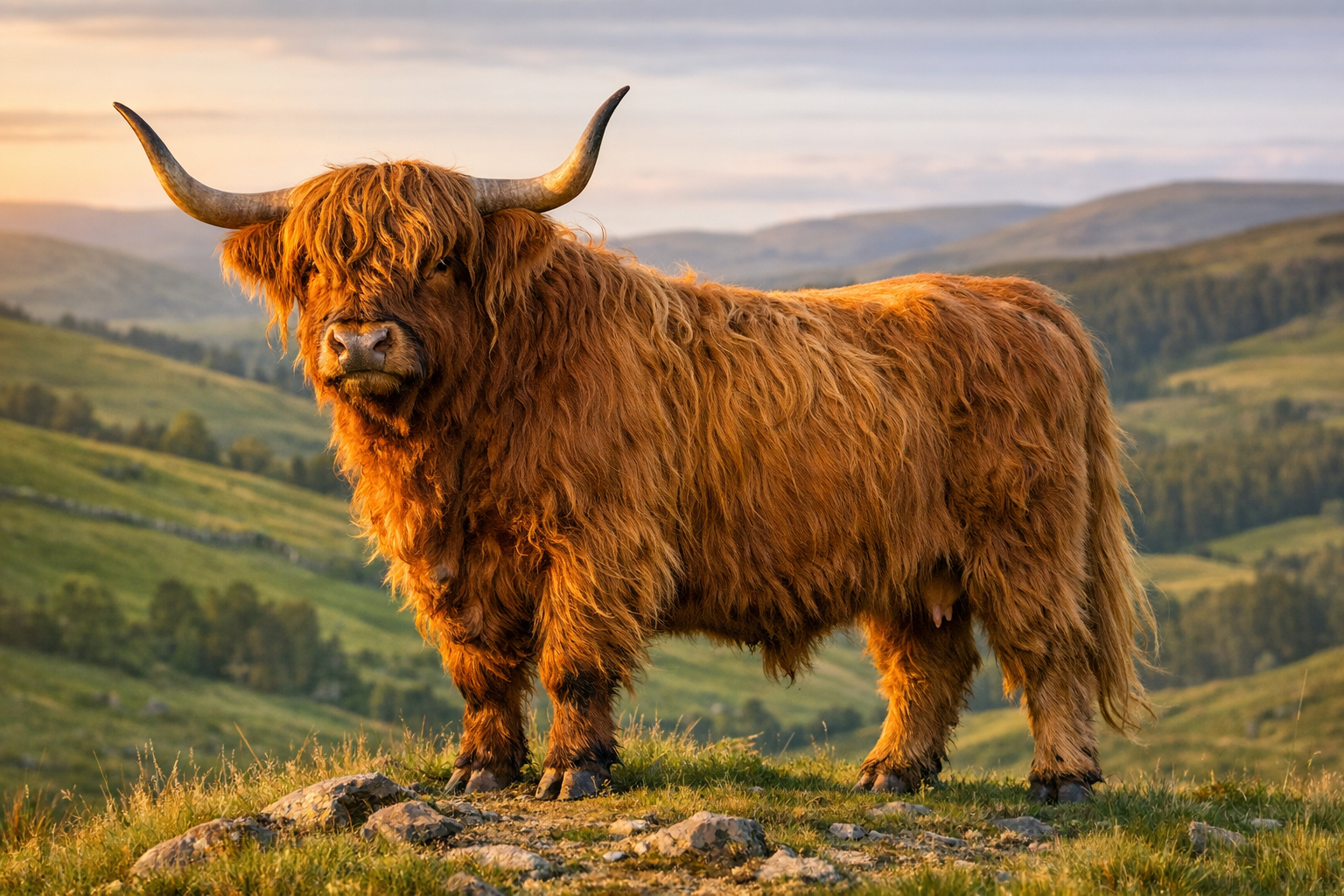
With their majestic horns, shaggy coats, and prehistoric appearance, Scottish Highland cattle capture attention wherever they go. But beyond their striking looks lies a heritage breed with remarkable characteristics that make them ideal for small farms, sustainable agriculture, and premium beef production.
A Living Link to the Past
Highland cattle are the oldest registered cattle breed in the world, with a documented herd book dating back to 1884. But their history extends far deeper — archaeological evidence suggests their ancestors roamed the Scottish Highlands for thousands of years. They evolved in one of Europe's harshest climates, where only the toughest genetics survived brutal winters, poor forage, and rugged terrain.
This ancient heritage means Highlands haven't been "improved" by modern selective breeding focused on rapid growth or extreme production. They remain remarkably close to their ancestral form, retaining traits like hardiness, longevity, and natural mothering ability that have been bred out of many commercial breeds.
Physical Characteristics That Matter
The Highland's most distinctive feature is their double coat: a long, coarse outer layer that sheds rain and snow, and a soft, insulating undercoat. This allows them to thrive in cold climates without the energy-expensive shivering that plagues other breeds. Interestingly, they also handle heat better than expected — that shaggy coat provides shade and protection from sun and insects.
Both bulls and cows have impressive horns that curve forward. These aren't just ornamental — they're functional tools for foraging through snow, defending calves, and establishing herd hierarchy. Highland horns are less aggressive than they appear; polled (hornless) cattle actually tend to use head-butting more frequently since they lack the visual "threat display" that horned cattle use.
The breed comes in a spectacular range of colors: red, black, dun (brown), yellow, white, and brindle. Each color has its devotees, though red and black are most common. At Primal Farms, we focus on red Highlands, believing they best represent the breed's classic appearance while also showing less fading in strong sunlight.
Temperament: Docile but Not Dumb
Despite their formidable appearance, Highlands are known for exceptionally calm temperaments when raised with regular human contact. They're curious, intelligent, and form strong bonds with their handlers. Cows are fiercely protective of calves for the first few days, but quickly settle into being attentive mothers who trust their people.
That said, "calm" doesn't mean "tame" — these are still large animals with independent minds. They respond best to low-stress handling, clear boundaries, and patience. Highlands that are pushed too hard or handled roughly can become stubborn. But treat them with respect and consistency, and you'll have cooperative animals that are a pleasure to work with.
Beef Quality Advantages
Highland beef commands premium prices for good reason. The meat is lean yet surprisingly tender, with fine-grained marbling that develops from grass finishing rather than grain. Their slower growth rate (compared to commercial breeds) allows the meat to develop more complex flavors. The beef is also higher in protein and lower in cholesterol than conventional beef.
Because Highlands evolved to efficiently convert rough forage, they produce well-finished beef on grass alone — no grain necessary. This makes them ideal for grass-fed operations and allows farmers to produce premium beef without the expense and health issues associated with feedlot finishing.
Why They're Perfect for Small Farms
Small-scale farmers are rediscovering Highlands for compelling reasons. They're "easy keepers" that thrive on marginal pasture other breeds would struggle with. They calve easily without assistance, have excellent maternal instincts, and show strong genetic diversity that reduces inbreeding concerns. Their gentle temperament means they're safer around children and inexperienced handlers.
Highland cattle are also "low-input" animals. They don't require grain finishing, rarely need veterinary intervention, and their winter coat eliminates the need for shelters in most climates. For someone wanting to start a small beef operation or breeding herd without massive infrastructure investment, Highlands are hard to beat.
Getting Started with Highlands
If you're considering adding Highlands to your farm, start by visiting established breeders to see the cattle in person and ask questions. Expect to pay more for registered, well-bred animals — but the investment is worth it for proven genetics and temperament. Start small with 2-3 bred heifers or a cow-calf pair to learn the breed before expanding.
Plan for good fencing (they respect it but those horns can reach through), clean water sources, and pasture rotation to prevent overgrazing. Most importantly, spend time with your Highlands. They're social creatures that thrive on routine interaction, and that relationship is what separates a calm, manageable herd from one that's nervous and difficult to work with.
Ready to Start Your Highland Herd?
We have registered breeding stock available year-round, plus calves each spring. Every animal is handled daily and raised on pasture.
View Available Cattle Contact Us